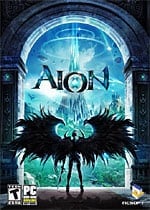
A Solid Experience Lacking Innovative Ideas
Video games have been recently categorized into two camps: ones that bring polish to already established norms of gameplay design and ones that try to break new ground by bringing innovation to gameplay design. NCSoft’s Aion certainly and unquestionably falls into the former, and whether that is a good or bad thing is purely a matter of perspective.
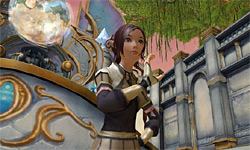
While one of the overarching issues with most MMORPG launches is the sheer number of bugs and glitches, Aion suffers very little from such problems. From the starter area to the first major city, stumbling upon a glitch or bug is practically a rarity. Players should find the ride to be relatively smooth, which is a huge factor when it comes to enjoying a game. If you can’t get it to work correctly, how would ever expect to have fun?
Unfortunately, server queues, even two weeks since launch, are still a problem. NCSoft has taken steps to help remedy the problem like opening new servers and setting a logout timer on AFK players with private stores open, a problem that only kept server queues long and painful. However, most mainstream MMORPGs suffer from these types of growing pains at launch anyway, and they tend to diminish once the initial shine wears off. Credit has to go to NCSoft for addressing the issues as best they can considering the popularity of the game. And, if popularity is one of the biggest issues with Aion, then that’s saying something.
The background story in Aion sets the players up for entering a conflict between the world’s main races: the Elyos and the Asmodians. The world has been severed in two pieces, with one getting direct sunlight, while the other only gets reflected sunlight. It is explained that the Elyos are warriors of the “light,” which can be construed as being the “good guys,” while the Asmodians are warriors of the “darkness,” or the “bad guys.” Unfortunately, aside from being told so by the narrator, there isn’t a lot of evidence in the game. Players of both races complete similar quests throughout the game such as helping farmers with pesky monster infestations, not exactly a very “dark” thing to do if you’re an Asmodian. On the other hand, it would be difficult to believe that one race is purely “good” and the other “evil,” so the lack of in-game proof isn’t too bothersome. Conversely, it doesn’t offer much variety in terms of gameplay between picking a side other than whether a player prefers black wings to white wings, or claws for feet to sandals.
There is an attempt to invoke interest in the plot by including short in-game cutscenes, but they are very much hit or miss. In most cases, the cutscene is nothing more than a camera panning over the area you must locate while an NPC delivers a brief verbal message. And the voice acting isn’t exactly top-notch either, which doesn’t help the cause at all. The rest of the game is told through the same quest dialog boxes that have been seen before.
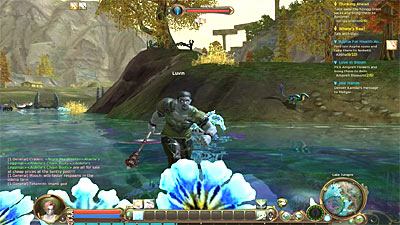
Immersion is taken up a notch by Aion’s visuals, which are supported by the acclaimed CryENGINE. The environments are rich and detailed, and the style brings something for nearly everyone. As players move from area to area, they’ll find that the scenery will never be too similar, which is a huge plus considering how much time you’ll be spending there before you can move on. Moreover, nothing quite captures the eye like looking up at the sky and seeing a giant whale-like creature slowly soaring across the horizon.
Nevertheless, considering the sheer visual capabilities of the CryENGINE, Aion leaves most of its features untapped, which is definitely a shame. Even last year’s Age of Conan boasts superior visuals compared to Aion. Of course, this isn’t to say Aion looks bad, it’s just exactly what you’d expect.
One great feature of Aion is its detailed character creation system. All the basic customizable options such as hairstyles, tattoos, and colors are available. There are also standard presets that help quicken the process by letting players choose a complete character they like the most and then just tweaking certain things. And, if that wasn’t enough, the game even gives you an advanced mode where you can adjust the finer details such as the length of your character’s nose or the width of his legs. In fact, the ability to create a unique character is almost a guarantee. If there is to be a downside to the system, it is that there seems to be no restrictions on the customization. If you want a character with legs that are a foot long and a torso that’s about five feet long, you can probably do it. While creating such characters would be entertaining, seeing them running around the world of Atreia just doesn’t make sense and breaks the seriousness of the game world. Nothing is stranger than seeing a fellow Asmodian that looks more like a bobble-head doll than a dangerous warrior.
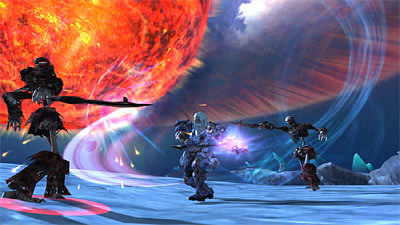
Aion also used a tiered class system, allowing players to pick from four main classes at the start, with each class branching into two specialized classes. Mages, which represent the magic-wielding, ranged DPS class are able to specialize as either a Sorcerer or the Spiritmaster, which gets the ability to summon creatures to fight alongside them. The Priest class is a balance between melee and ranged combat. Its specialized classes are the Chanter, which acts as a support class that provides bonuses to allies, and the Cleric, which acts as the games main healer class. The Scout class can eventually specialize as an Assassin, which provides the stealth damage-dealing gameplay style, and the Ranger, which is a ranged damage-dealer that also uses traps to hinder opponents. Finally, the Warrior class, which is mostly melee-oriented, can specialize as a close-combat, damage-dealing Gladiator, or as a tough, tank-type Templar.
While the tiered class system does offer the feeling of progression and choice, it is down as soon as the player leaves the starting area around level 10, which makes it seem all rather pointless. If progression ends so quickly, why bother forcing players to do it at all? Instead, what’s wrong with letting them choose among eight main classes from the start? I suppose it does offer a small amount of familiarity by playing one of the four main classes at first. Occasionally, players do need a small dose of a class before they are able to decide, and the tiered system does offer that.
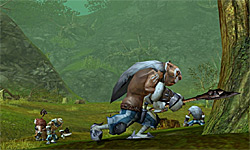
While PvE does come standard in Aion, a large portion of its success hinges on its PvPvE system, which attempts to break the stereotypical feud between gamers who prefer PvE over PvP and vice versa. The PvP combat takes place in three major ways: duels, rift events, and in The Abyss. The dueling system is just what you’d expect and doesn’t require any more input as it does the job. The rift events occur when a rift opens between both side’s worlds, allowing players from both races to cross over into the other faction’s land and wreak havoc. This provides a certain level of strategic depth to the gameplay because the rifts themselves can be destroyed, which can save your world from the enemy or leave you stranded and cutoff from reinforcements. Despite how much fun these scenarios can be, players won’t get an opportunity to experience them until much later in the game, leaving nothing but the dueling system to keep their PvP-lust in check.
Once a player does reach the appropriate level, however, The Abyss also becomes available. Essentially, it is a large environment that exists between the Elyos’ and Asmodians’ worlds. This is also the setting for Aion’s PvPvE system, which features the Balaur as an AI-controlled third faction. The zone is broken into small floating shards and littered with fortresses that can be captured. Initially, all the areas are controlled by the Balaur, which forces players from both factions to defeat them before they can gain a foothold. From that moment on, a struggle among the three factions ensues as fortresses are lost and captured. To help build relevance to the system, how much territory a faction controls determines what kinds of bonuses are given. Lower prices at NPC vendors and increased abilities give players a reason to fight and hold onto territory in The Abyss.
The PvPvE system, however, isn’t without its flaws. Like all two-way faction systems, server population balance is key. As soon as one faction outnumbers the other, the problems with the system become apparent. And, while the system does attempt to accommodate players who enjoy both styles of gameplay, it is unclear as to how well it actually will. In the end, most PvE players will probably leave The Abyss to the PvP-oriented.
Another big element to Aion is the ability to fly at level 10, which is when you complete the starter area and receive your wings. The ability fight while in flight is also a very cool concept, and using it for travel definitely beats walking. One criticism of the system, however, is that it feels relatively underused. Many areas of the game restrict players from flying at all, which seems odd and just plain stupid. And, while the idea of fighting in the air sounds cool as well, players shouldn’t expect aerial acrobatics or dogfights because you’ll have your hopes dashed. Instead, envision your standard MMORPG combat mechanics, players standing around each other taking turns hitting each other with projectiles, melee weapons, and spells. While the idea of free flying in an MMORPG sounds amazing, and despite how the controls for doing so are solid, it comes across more like a cheap gimmick than an actual gameplay enhancer.
Aion isn’t anything gamers haven’t already seen in one MMORPG or another. While the game does a decent job at pulling a lot of concepts together, it will bring about more moments of nostalgia than it will create. It will have players thinking, “Hey, this reminds me of…” as they imagine special moments in Azeroth, Middle Earth, Hyboria, and other lands of adventure. With that being said, you cannot deny that the game is polished and feels solid, which goes a long way considering how buggy most MMORPGs are when they release.
In the end, Aion is one of the best, most well-polished MMORPGs to be released in a long time, which is reinforced by its popularity and hype. It stays within the traditions of an aging genre and makes sure to maximize on it at the same time. Nevertheless, its lack of unique components doesn’t help set it apart from the competition, and calls into question Aion’s ability to establish a solid, faithful, and long-lasting community. The bottom-line? If you’re looking for innovative design concepts and new avenues of gameplay, then Aion won’t impress, but if you’re just looking for solid gameplay you already know and love, then it’s definitely worth your attention.
RATING OUT OF 5 RATING DESCRIPTION 3.5 Graphics
Visuals are up to par with most MMORPGs on the market, but seem a little lacking considering CryENGINE technology. 4.0 Control
Standard MMORPG system provides smooth control and plenty of customizable features to accommodate the pickiest of gamers. 3.5 Music / Sound FX / Voice Acting
The music is well orchestrated and does a great job of establishing the mood but can be repetitive. What little amount of voice acting involved can be anywhere ranging from corny to just plain terrible. 3.5 Play Value
Standard MMORPG gameplay is polished and relatively bug free. Unfortunately, it doesn’t do anything to break the mold at all. 3.7 Overall Rating – Good
Not an average. See Rating legend above for a final score breakdown.
Game Features: