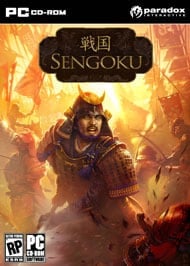
The Warring States
To the unitiated, the new PC game Sengoku might sound eerily familiar. It is a strategy game set in feudal Japan, and your goal is to become shogun. Yes, at the most basic level, it’s a lot like Shogun 2: Total War, which also brought feudal Japan to life in the strategy genre this year.
However, developer Paradox takes a very different approach to this concept than Creative Assembly did. In Shogun 2, players alternated between turn-based, Civilization-style strategy sessions and real-time tactical battles. In Sengoku, you’ll be focusing primarily on a different pursuit: diplomacy.
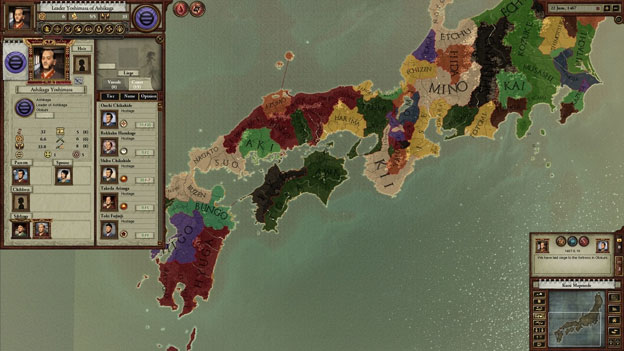
At heart, Sengoku isn’t about resource management, battle tactics, or even war in general. Rather, this is a game about interpersonal relationships and politics—it’s a game in which you micromanage, scheme, and backstab like a reality TV contestant until you’re the last man standing. While you will build an army and invade foreign territories, the battles play out in simple Risk fashion; the bigger army usually wins, with a little dose of chance thrown in if the contestants are closely matched. Instead, your most important tasks are to make sure that the right people are in the right positions in your administration, and then to navigate your alliances and conflicts carefully. If you can control more than half of Japan for 36 months, the shogunship (if that’s a word) belongs to you.
Before going any further, I should make something very clear: I learned early on that this isn’t really my kind of game. To be blunt, I found it boring as hell. When I play a strategy title, I like a lot of action, and maybe a chance to destroy some enemy troops in a horrifically gory manner—anything to take my mind off the genre’s more fiddly aspects for a bit. I certainly don’t gravitate toward games that focus on simulating social relationships, or that require me to put a lot of effort into my every decision.
Playing Sengoku, I felt like I was spending a lot of time dealing with advisers and foreign leaders, a lot of time waiting for projects to be completed, a lot of time slogging through absurdly long on-screen instructions to figure out how everything works, a lot of time figuring out how to navigate the menus, and not a lot of time pillaging towns with wanton abandon. In any given Sengoku game, it takes hours for things to get interesting, and even then, there’s not much white-knuckle excitement. This is a title for patient gamers who revel in complex relationships, and if you, like me, are not that kind of gamer, you should stay away.
But it’s my job, as a reviewer, to give every game a fair shot—so here goes. It is clear that a lot of time, effort, and care went into the development of Sengoku, and I have no doubt that fans of Paradox’s brand of strategy, encapsulated in games like Europa Universalis III and Crusader Kings II, will eat it right up.
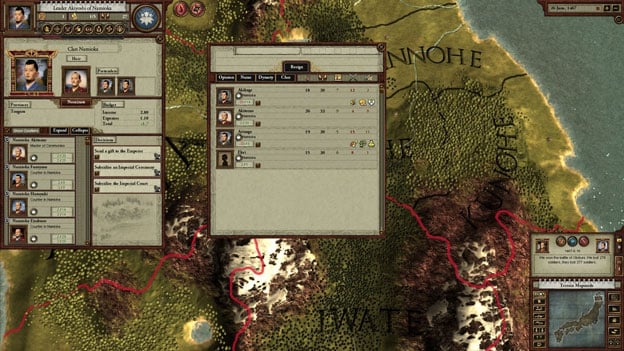
Sengoku is a “pausable” real-time strategy game, meaning that while it’s not turn-based, you can stop time whenever you want rather than frantically clicking your commands as time marches on. You can also speed up time if you don’t have anything to do until some projects are done, or slow it down if things get complicated. And they will get complicated, because there’s a whole lot going on under the hood of this game.
As you begin a game, you can pick between four starting scenarios, all of which begin in 1467: the Ōnin War, the Kanto War, the Kyushu Region, and the Tohoku Region. You also pick a character, based on a historical map. You’re given a staff to work with, also based on real history, and from that staff you have to choose three advisers, whom you can fire at any time. Your Master at Arms can build you an army, your Master of the Guard can build guilds at home or sow dissent in foreign territories, and your Master of Ceremonies builds infrastructure and collects taxes. Each of these positions demands specific skills, so you have to make sure you pick the right person for each. Periodically, you receive notices that members of your staff have ambitions to do better things than you currently allow them to, so you have to see if you can accommodate them.
As I’ve mentioned, at the beginning of a game, it takes quite a bit of time for your advisers to really get to work. Money is scarce, and even if you speed up time, it can take hours to build up a force capable of winning battles, not to mention a tax base big enough to sustain it. But once you get into the swing of things, the complex machinery underlying Sengoku comes to the surface.
With your army growing, your attention will turn to rival territories—and eventually, even gunpowder-bearing European societies. When it comes to avoiding war, the game features no permanent alliances, but you can sign non-aggression pacts. True to the setting and historical period, these pacts aren’t sealed with a treaty—instead, the two parties exchange hostages who are blood relatives of their rulers.
Blood relatives play a huge role in the game, so you don’t want to take this commitment lightly. A single game can span hundreds of years, and the only way to continue playing when your character dies is to make sure you have suitable heirs. Blood ties can also forge a bond between two territories. This means that you have to choose your spouse—and your underlings’ spouses—very carefully. Yes, one of your many roles in Sengoku will be that of a feudal pimp.
Like any good strategy game, Sengoku has numerous systems that present you with risks and rewards. While you won’t be dealing with a tech tree or a complex variety of resources, you will have to preserve your honor, a resource that waxes and wanes as you do things like make “plots” to undermine rivals and send gifts. If your honor runs low, your underlings lose respect for you and might even rebel; if you run out, you commit seppuku, or ritual suicide. There are also several religious factions (Shintoism, Buddhism, and later Christianity) that provide different perks.
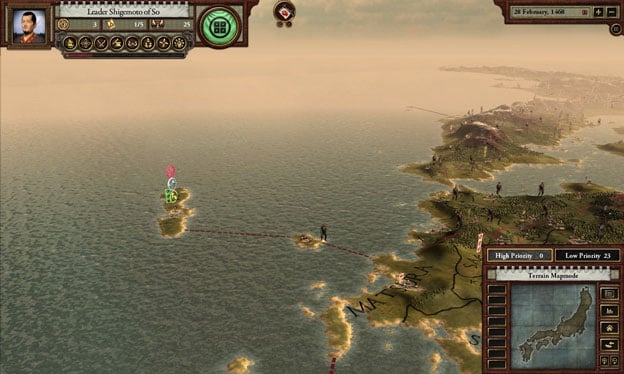
The battle system here is fairly primitive, and nothing like the detailed and entertaining RTS warfare that Shogun 2 offered—as I mentioned earlier, it’s not much different than Risk, with the bigger army winning most of the time. There is no naval warfare at all, and while putting a rival castle under siege may sound fun in theory, it’s a long, tedious process in practice.
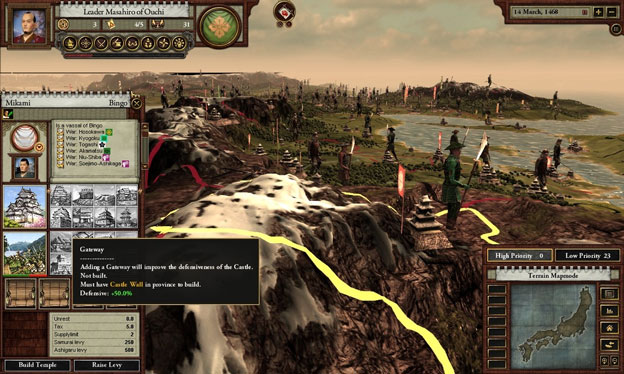
One interesting feature is that you can recruit ninja clans for a variety of tasks, such as spying, serving as bodyguards, killing rival leaders, and even rescuing hostages so that you can break a pact without consequence. While you do have to be careful not to overextend yourself, and while there is a strategy element to your decisions about whom to attack and how, I tended to see the military angle of Sengoku as secondary to the diplomatic one by quite a margin.
Conducting diplomacy in feudal Japan is an incredibly complicated endeavor, so I would recommend playing a game or two in Sengoku’s single-player mode before tackling multiplayer. When you do try multiplayer, it’s the same game, only with real people controlling some of your rivals.
In terms of presentation, the game is successful, though limited in its ambition. There is no voice acting whatsoever—which is disappointing until you remember all the awful stereotypes that Asian characters in strategy games usually embody. The sound effects are low-key but effective, the music captures the culture it’s meant to represent, and the graphics look nice without breaking any new visual ground.
If you prefer strategy games with a strong kinetic aspect—armies moving constantly, battles breaking out at a steady pace, and lots of life-or-death decisions to be made—Sengoku will be far too thoughtful and tedious for you. It certainly was for me. But if you want a well-made, carefully balanced simulation of the diplomatic choices that a feudal ruler would have to make, take some time off of work. With its deep gameplay and slow pace, Sengoku can absorb weeks of your life if you find yourself liking it too much.
RATING OUT OF 5 RATING DESCRIPTION 3.5 Graphics
The game looks good, but doesn’t break any new visual ground. 2.8 Control
The menus are confusing to navigate, but you can pause time, so it doesn’t hurt your game. 4.0 Music / Sound FX / Voice Acting
There’s no voice acting, but the sound effects are effective and the music captures the culture it’s meant to represent. 4.0 Play Value
This is not for everyone, but if you want a feudal Japan political simulator, it provides hours of entertainment. 3.7 Overall Rating – Good
Not an average. See Rating legend below for a final score breakdown.
| Review Rating Legend | |||
|---|---|---|---|
| 0.1 – 1.9 = Avoid | 2.5 – 2.9 = Average | 3.5 – 3.9 = Good | 4.5 – 4.9 = Must Buy |
| 2.0 – 2.4 = Poor | 3.0 – 3.4 = Fair | 4.0 – 4.4 = Great | 5.0 = The Best |
Game Features: