
When I got the chance to preview Reptilian Rising just a couple of months ago, what stood out most to me was the game’s unique identity. Turn-based tactics roguelikes aren’t exactly anything new, but what Reptilian Rising was bringing to the table (both literally and figuratively) was — here was a board game and tabletop RPG-inspired tactics game with a cool toybox aesthetic and story that felt like a tongue-in-cheek sci-fi play on Bill & Ted’s Excellent Adventure. Gathering heroes from across the history of planet Earth, it was up to you to stop an invasion of evil, time-traveling reptiles hell-bent on becoming the dominant species and rewriting reality as we know it. And, as it turns out, the demo was enough to sell me on the idea that Reptilian Rising‘s developers were onto something when it came to making each encounter feel immediately satisfying and rewarding.
Unfortunately, the full experience of Reptilian Rising is where the cracks in the veneer start to show a little bit more. While the moment-to-moment gameplay of Reptilian Rising is both fun and worthy of returning to for a quick fix of some solid turn-based tactical action, it’s the other areas supporting its core gameplay loop that fall a bit short. Where Reptilian Rising most notably stumbles is with that unique presentation that initially helped it stand out in a sea of like-minded competitors, not in its concept but with its execution. Reptilian Rising has plenty of charm that’s only further underscored by its smart and snappy tactical puzzling in its encounter design, but a generally underwhelming feeling to the game’s polish and presentation holds the rest of the package from matching that initial charm.
The Time Traveling Premise Gives Reptilian Rising Plenty of Variety
©Reptilian Rising gameplay screenshot – Original
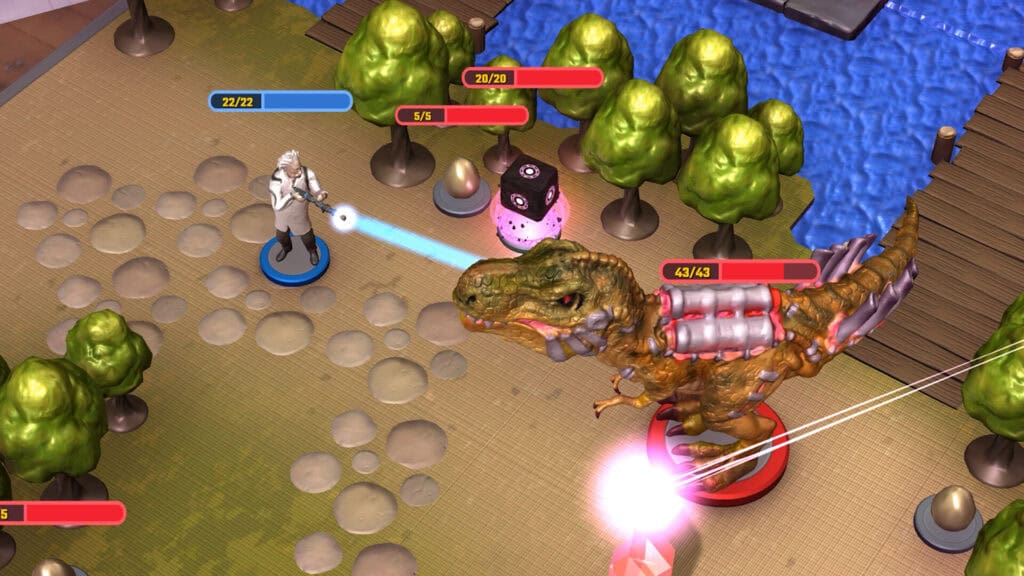
The time travel setting and premise of Reptilian Rising is actually a lot more than just set dressing, giving the game a unique structure to how it organizes runs, encounters, and overall progression. Each of the different timelines constitutes a unique “Era”, each of which acts as a self-contained sequence of stages, enemies, and bosses that gives each run a sense of purpose while still leaning into the unpredictability that defines roguelikes. Best of all, the ability to recruit, mix, and match heroes from across different timelines means that you might have Crusades-era serfs fighting alongside historical figures like Cleopatra and FDR, which is both absurd and advantageous when you see how their different abilities and combat styles complement one another on the field of battle.
That same sense of variety carries over to the encounters themselves, with each new timeline presenting a subtle shift to the tactical battling that you’ve experienced in previous ones. Enemy types and compositions change and evolve, the style of level design and layouts rotate to fit the era (all while still embodying a very cool “tabletop RPG miniatures come-to-life” feel), and the pacing of each battle ramps up in a way that keeps each new run feeling distinct from the last. Best of all, each encounter is short and paced well enough that going back and replaying them time and again (which, you’ll definitely be doing thanks to some occasional difficulty spikes — more on that shortly) is still engaging and entertaining after multiple runs, even within the same timeline.
Reptilian Rising’s Difficulty and Balance Are All Over the Place
©Reptilian Rising gameplay screenshot – Original
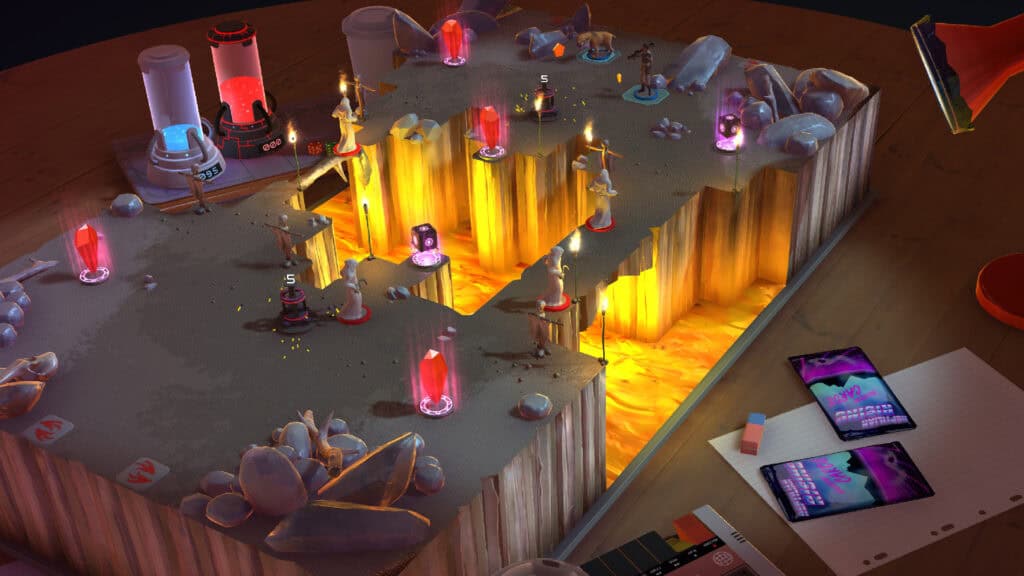
As fun as Reptilian Rising‘s core gameplay loop can be for a turn-based tactics fan, the inconsistency of its difficulty curve becomes harder and harder to ignore the deeper you delve into its timeline-spanning campaign. The early encounters are well-tuned and feature pacing that can best be described as “brisk”, letting players come to grips with the general flow of capturing time gates, deploying additional heroes, and blocking reinforcements while taking out enemies in some classic grid-based tactics. Experimenting with positioning, team composition, and different special abilities (and maximizing your potential to deploy them by accumulating “time energy”) is immediately fun and rewarding, providing the satisfaction of knowing your tactical decisions have resulted in optimal outcomes.
And while that early sense of momentum is one of Reptilian Rising‘s strong suits and something great at immediately pulling you into the game and getting you on board, that initial finely-tuned balance quickly falls apart the further you progress into the game’s campaign. Once you encounter your first Elite enemy in a timeline-ending boss encounter, you’ll quickly realize that the freedom and experimentation of earlier levels is eschewed in favor of shoehorning players into very specific strategies and win conditions, where the disparity between ranged and melee characters becomes ever more apparent. It’s still fun to puzzle out how to emerge victorious in these encounters, but that feeling of Reptilian Rising being at odds with the parts of itself that are executed well is hard to shake.
Roguelike Structure and Plenty of Unlocks Enhance Replayability

©Reptilian Rising gameplay screenshot – Original
That said, Reptilian Rising‘s roguelike structure means that every death equates to coming back stronger and better equipped to tackle the challenge a timeline presents. Both within-run and meta progression are doled out at a steady clip to make each failure feel as essential as a win, and the amount of new characters, modifiers, and enhancements to abilities you’re able to acquire after each run provides plenty of incentive to keep playing, even if you’ve just been frustrated by a very pronounced difficulty spike in a boss battle. This ultimately comes down to how Reptilian Rising handles its in-game economy, providing players with just two resources to collect during runs (gold and obsidian); a move that feels downright refreshing compared to some other games in the genre.
Within runs, players can collect trading cards, cassette tapes that add songs to the music player in the hub area, and additional heroes, which provide the best chance at getting a character who may give you a distinct edge in the battles to come. While most rolls on these character pick-ups will provide you with era-appropriate heroes, sometimes you’ll get incredibly lucky with the RNG and get an Atomic or Silicon-era hero in a less technologically-advanced age, which helps provide a strong early advantage that you can keep building momentum from ahead of the run’s boss battle. That classic dopamine hit of “play, loot, repeat” is what will likely keep players coming back to Reptilian Rising, because it’s fairly well dialed in right from the get-go.
Solid Tactical Gameplay is Held Back By a General Lack of Polish
©Reptilian Rising gameplay screenshot – Original
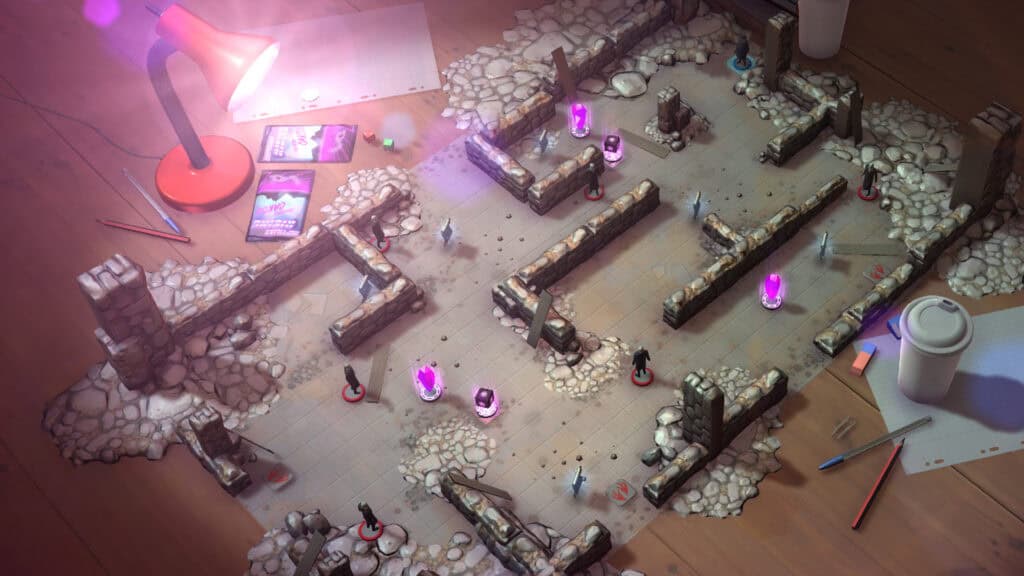
Unfortunately, the strengths of Reptilian Rising‘s gameplay are noticeably undercut by a general lack of polish that shows up in several areas of the experience. A particular point of contention is the menus and user interface, two elements that are pretty critical to the turn-based tactics genre. The menus themselves are functional, but they lack any of the identity or visual cohesion of the rest of Reptilian Rising‘s rather unique presentation, which feels like a bit of a missed opportunity. It doesn’t help, then, that navigating these menus and the core user interface can feel clunky and, at times, unresponsive. There’s a bit of a disconnect between Reptilian Rising‘s cool premise and its execution.
The creative, tabletop RPG and miniatures aesthetic gives the core gameplay a unique look and feel, but the UI elements feel barebones, almost as if the developer ran out of time and/or money and figured, “Ah, let’s just ship it.” And, to be fair, that’s a situation that a lot of indie developers find themselves in. In this case, though, it’s particularly noticeable because of how strong the core gameplay foundation of Reptilian Rising is, where the gameplay loop and satisfying sense of progression warrant themselves for multiple runs, but the other elements surrounding them make the experience as a whole feel less refined than it could or should have been.
Bottom Line
Reptilian Rising is strangely a game that succeeds where it matters most (in actually playing the game) but struggles to support that success with the same level of care put into its other systems and presentation. That said, while the flaws the game has do become more apparent over time, it’s hard not to have fun with Reptilian Rising in the moment. It’s a strong, if not flawed, new entry into the growing turn-based tactics roguelike space. Of course, with plenty of other competitors nipping at its heels and vying for players’ time, attention, and hard-earned money, the question then becomes, “Are the fun parts of Reptilian Rising enough to look past those flaws and add it to your library instead of a competitor?” I wish there were a clearer, more definitive answer, because the best I can give is a “maybe”.
For players who are willing to look past its rough edges and appreciate the thought that went into its moment-to-moment gameplay and bite-sized tactical puzzles, there’s a lot to like about Reptilian Rising. Roguelikes can be great in either short bursts or longer play sessions, as “one more run” casually gives way to a few dozen, and Reptilian Rising does feature moments of brilliance where it’s easier to put aside its more obvious shortcomings in favor of simply embracing the strength of its moment-to-moment gameplay and rewarding encounter design. With a foundation this strong, there’s opportunity for Reptilian Rising‘s developers, whether through updates to this game or ideas implemented in a potential follow-up, to deliver something that stands out even further.
Rating: 6.5/10
Reptilian Rising is available now for PC and Nintendo Switch. CheatCC was provided with PC code for this review.
The image featured at the top of this post is ©Repitilian Rising key art / Original