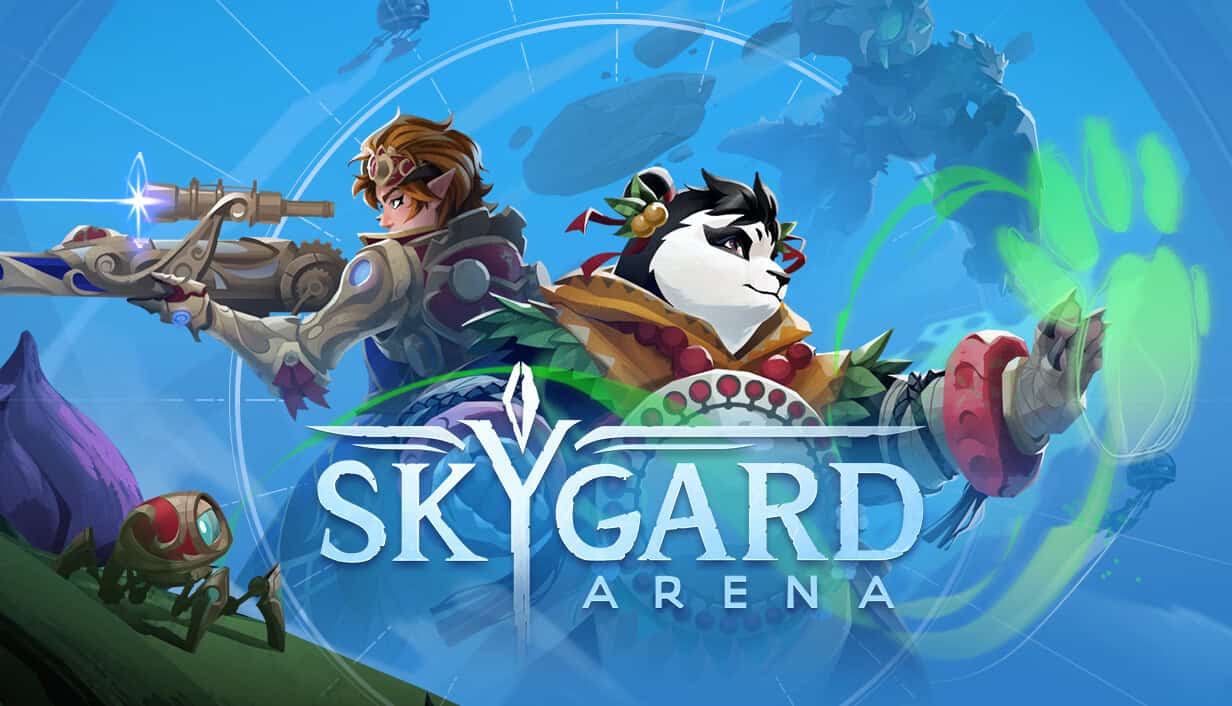
The turn-based tactical RPG and multiplayer online battle arena (MOBA) genres have their established favorites, so it’s surprising to see a game like Skygard Arena come around and attempt to capture the audiences of both. Just this year we’ve gotten some stellar new TRPGs and have one of the genre’s biggest releases to-date to look forward to with next week’s Final Fantasy Tactics: The Ivalice Chronicles, and the MOBA genre’s established leaders — League of Legends and DOTA 2 — show absolutely no signs of slowing down as two of the most popular and successful games for competitive eSports and streaming. It begs the question, then, of whether an indie title like Skygard Arena can offer enough to entice fans of one genre or both, to which the answer is: yes and no.
Skygard Arena strikes a curious balance between two very different genres — the TRPG and the MOBA. Players can go in expecting familiar, grid-based tactical combat, but the moment-to-moment gameplay and victory conditions for each mission hinge on the abilities of a selection of bespoke, MOBA-style heroes whose kits each offer something unique on the battlefield. In theory, this combination sounds like it would be a winning mix between something like Overwatch and XCOM 2, and though it does shine with moments of brilliance in both its single-player campaign and multiplayer arena modes, it still feels like the experience is a little thin. Rather than fully lean into one genre, Skygard Arena dips its toes into two distinct gameplay styles, but not deeply enough to provide the rewarding strategy of a TRPG or the near-endless replayability of a MOBA or hero shooter.
Turn-Based Combat With Bespoke Heroes

©
The stars of Skygard Arena are the game’s different Champions; ten different bespoke heroes who each have specific kits split between two different “Personas” that equate to class-specific loadouts. The game’s introductory cinematic introduces us to Skygard‘s world and its 5 different clans, each of which contains two different Champions, which we get to both fight with and against throughout the game’s campaign mode and in the PvP Arena. Each of the playable heroes slots nicely into class archetypes that anyone who’s familiar with TRPGs or MOBAs before will be used to, and they improve in their utility and effectiveness throughout the game by unlocking different Relics that provide different bonuses or buffs to the suite of abilities present in each Persona.
Things start simply enough with main character Na Jima and her ally Daerio, who fulfill the archer and rogue roles, respectively. Eventually, you’ll unlock more varied Champions that introduce some new and interesting kits that shake up how you approach different missions, and these new playable characters arrive regularly enough that you’ve got an incentive to try them out and see how they synergize with established favorites. That said, the fact that these Champions are premade heroes places some limitations on their kits that aren’t easily overcome (and wouldn’t normally be there in a more traditional TRPG), and it can quickly feel like you’re running up against a brick wall with a limited number of characters to use and only so many variations on their abilities. That problem only becomes worse when you butt heads with some of Skygard Arena‘s vicious difficulty spikes.
Skygard Arena’s Campaign Hits Some Bumps Along the Road
©
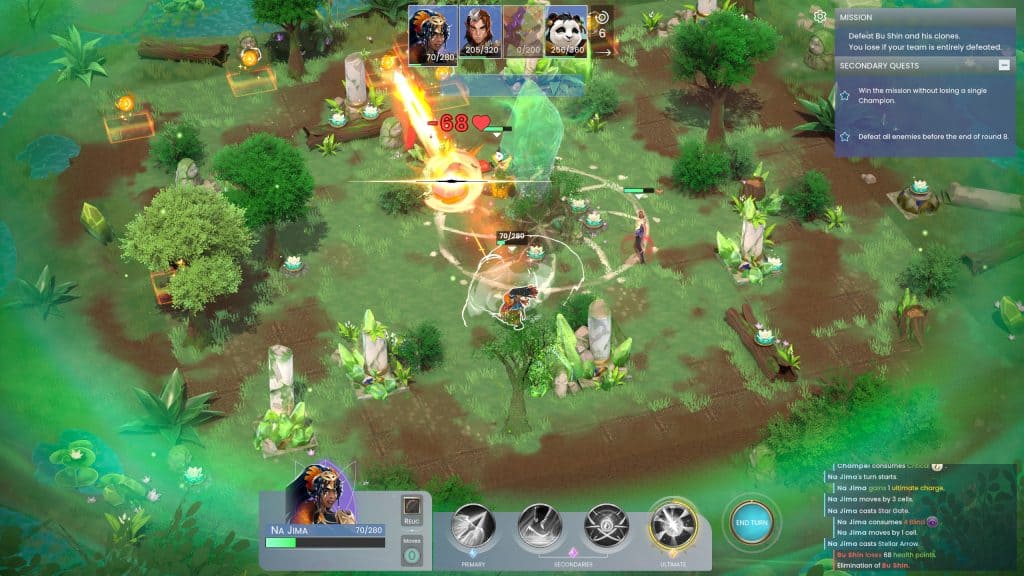
The single-player mode of Skygard Arena is great to have for a game with a multiplayer focus, but it’s worth noting that it’s incredibly short. The campaign consists of 13 missions that introduce players to each of the playable Champions, and each of these missions has both primary and secondary objectives that give you a taste of what’s to come in the more robust Arena mode. Like in a lot of other TRPGs, the conditions for victory mostly center around eliminating all enemies or protecting a specific NPC, but occasionally, Skygard Arena‘s campaign will throw you for a loop and have you complete some very MOBA-style objectives like capturing all of the spawn points in a level (known as Pillars) or preventing enemy Champions from advancing across the map.
Those varied objectives would be all well and good (and even welcome, especially for someone who plays just about every TRPG they can get their hands on), but they also lead to one of the main frustrations players are likely to have with Skygard Arena‘s campaign: absurd difficulty spikes. As previously mentioned, the pre-set kits of the Champions — along with the cadence at which the game introduces new ones to experiment with — means that you’ll be locked into a very specific strategy on certain missions that simply doesn’t work.
Where I Almost Gave Up on Skygard Arena
In one particularly difficult escort mission about halfway through the campaign, I had to try roughly 15 times to beat it (and even then, just by the seat of my pants) by relying solely on the RNG to work in my favor. And as much as I love XCOM 2, being fully at the mercy of a vindictive RNG isn’t my idea of a good time. I wish I could say it was just that one instance, but it was a regular issue I ran up against during my time with Skygard Arena‘s campaign on the standard difficulty. Still, the actual moment-to-moment tactical battling of Skygard Arena is strong enough that I ultimately stuck around to see things through.
The ‘Arena’ in Skygard Arena is Where the Bulk of the Action Is
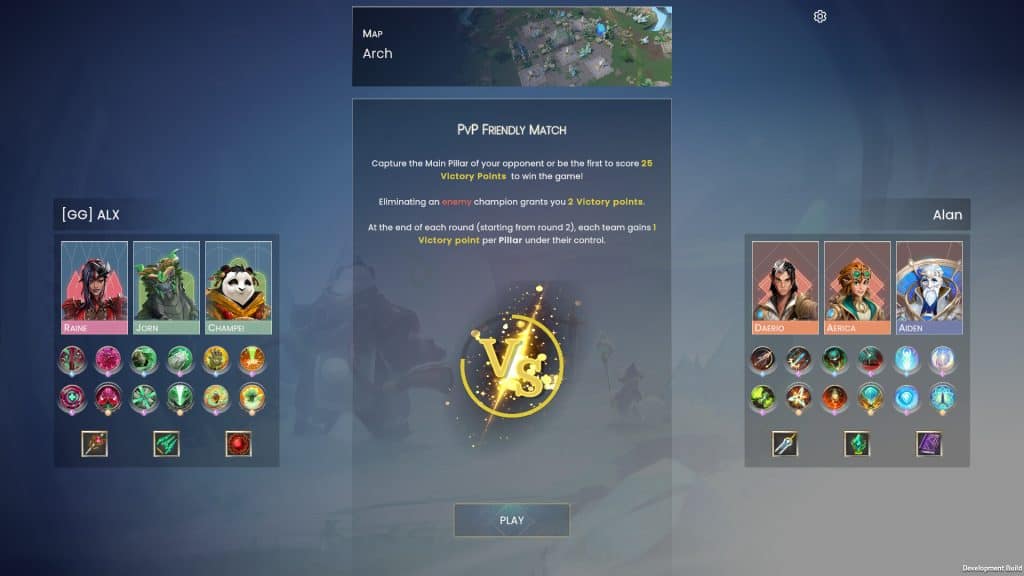
©Skygard Arena gameplay screenshot – Original
I’d strongly recommend finishing the Campaign of Skygard Arena before diving into the multiplayer-centric Arena mode. Not only is the Campaign short, it does a good job of letting you get a feel for the different mechanics and heroes that will be at play in the Arena mode, acting as a great primer for what’s arguably the strongest pull of Skygard Arena. While the MOBA genre is built around multiplayer (it’s in the genre name, after all), TRPGs are traditionally solo affairs, which makes the multiplayer tactical battling of Skygard Arena a nice change of pace.
In addition to both friendly and ranked PvP matches (each with a separate menu option for matchmaking), players can try out different strategies against Skygard Arena‘s AI, which developer Gemelli Games has done a commendable job crafting. There are actually 4 different AI parameters to battle against — standard and Experimental 1-3 — that each has its own flow to combat and requires varying degrees of complex thought and strategy. In our experience, though, even the standard AI can do a great job of anticipating your heroes’ moves and respond accordingly.
The Arena mode is also where players will get a greater sense of Skygard Arena‘s MOBA mechanics, with the primary focus of each battle being controlling and holding the different respawn Pillars in each map, closing off enemies’ opportunities for Champion respawns, and earning more points toward a game-winning total after each round.
What’s New in Skygard Arena 1.0 Versus Early Access
©
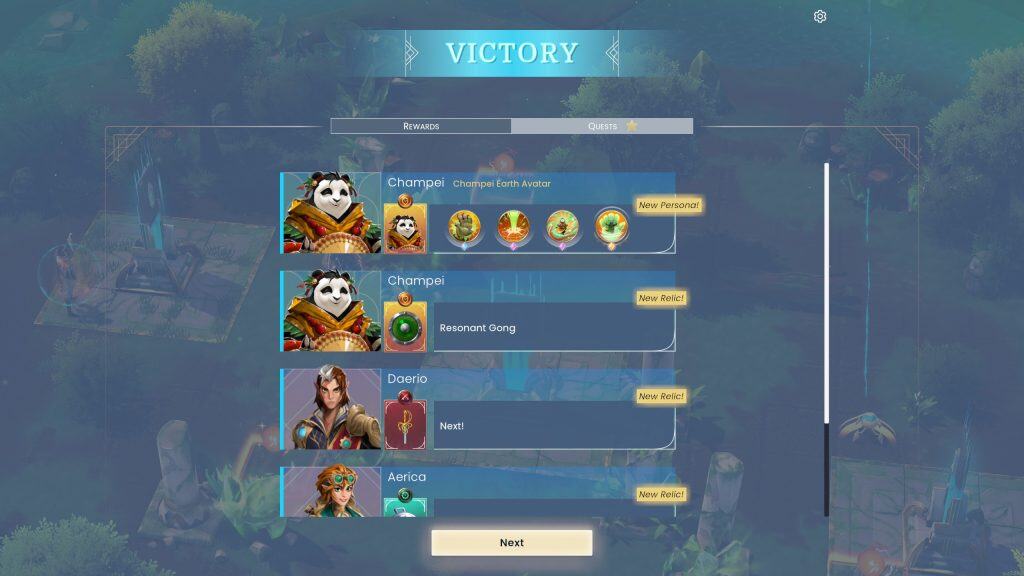
Gemelli Games would initially launch Skygard Arena into Early Access last November, and since then, it’s undergone a good deal of polish and enhancement. The game’s launch into 1.0 sees it adding the 10th and final (for now, at least) Champion to the game’s roster of playable heroes, as well as a slew of new relics that players can unlock after completing missions in Campaign mode. There are up to three different relics for each Champion’s Personas, making for a total of 6 relics for each playable hero, and these provide varying degrees of bonuses that help facilitate certain play styles or make meeting certain objectives easier.
But the biggest addition arriving as part of the game’s 1.0 launch is its compatibility with Steam Deck, where a game like Skygard Arena is sure to shine. Though most of our playthrough for review was completed on desktop, we were able to test out the game’s performance on an LCD Steam Deck and can confirm that it works great with the default control scheme, even if it is a little quick to drain the unit’s battery. Ultimately, if you’ve had your eye on Skygard Arena as a game you’re interested in but have been waiting for it to hit 1.0, you’ll find that the game does have enough content to warrant its $14.99 MSRP, for the most part.
Skygard Arena’s Technical State Currently Leaves a Bit to Be Desired
©
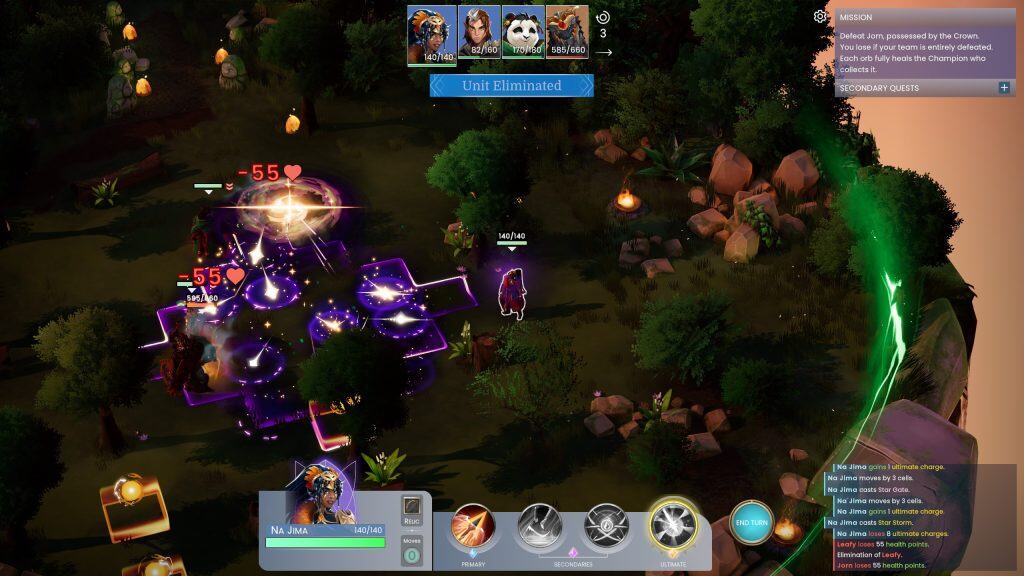
Presentation-wise, Skygard Arena has bright, colorful visuals that would fit right in alongside other MOBAs like League of Legends or DOTA 2, and it’s also worth mentioning that it has a great soundtrack. Less great, though, are the frequent stutters and frame drops that can occur when the on-screen action gets too hectic, which happens often enough that it does detract from the experience. In one instance, the game hard crashed on us, forcing a system restart. One instance of a crash out of roughly 7 hours of playtime isn’t a deal-breaker, but it’s still necessary to point out. Our testing on Steam Deck was limited, but we did notice similar issues with slowdown and stuttering in some of the busier missions with multiple enemies on the map and effects firing off everywhere.
Bottom Line
Skygard Arena earns at least some praise for trying something new. But it goes beyond a unique genre combination to be a mostly fun experience that’s enjoyable to play, until it isn’t. Were it not for the uneven difficulty of the campaign and the limitations that the game’s premade heroes enforce on the player, Skygard Arena would be an instant recommendation to anyone who’s a fan of TRPGs. But as someone who’s very familiar with the genre, I have to admit that I found the experience to be less fulfilling than I would’ve hoped for.
Still, there’s something to be said about the value that Skygard Arena offers. Its campaign may be short (and frustrating at certain choke points), but its multiplayer arena mode is the kind of thing that I could see tactics fans getting dozens
The image featured at the top of this post is ©Skygard Arena key art / Original