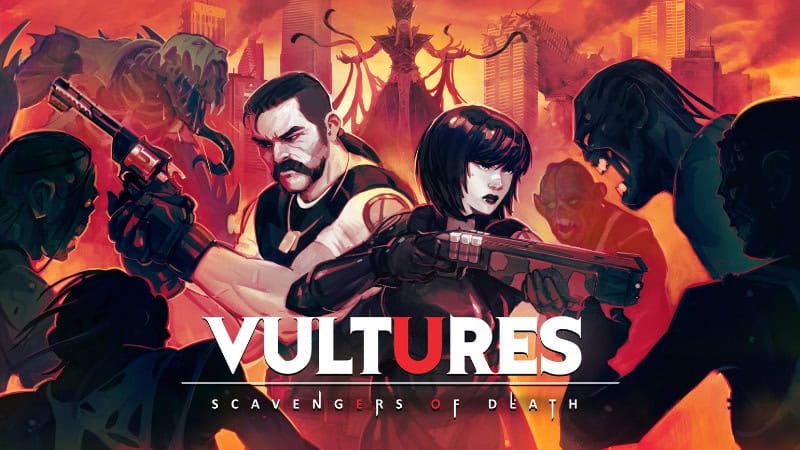
You ever play a game and get so blown away by the concept that you’re maybe willing to overlook some of its more obvious faults? That’s the position I find myself in with Vultures: Scavengers of Death, the turn-based tactics-and-survival-horror hybrid from the aptly named Team Vultures.
When I previewed Vultures back in February and went hands-on with its latest build ahead of Steam Next Fest, I couldn’t believe that a game I’d essentially been dreaming about for nearly 30 years, a blend of Resident Evil and Final Fantasy Tactics, had finally become a reality. Vultures understands exactly what works about both genres and combines them into a cohesive, genuinely thrilling experience that, frankly, feels surprising no one attempted sooner.
But taking a step back and looking at the full experience objectively, my feelings are a little more complicated. On one hand, Vultures absolutely nails its core concept, proving that the survival horror and turn-based tactics hybrid works remarkably well. The pacing is tight, the combat is consistently engaging, and the game rarely stops being fun. On the other hand, several progression-breaking bugs and technical issues remain, even after some last-minute delays intended to add an extra layer of polish.
I’m not going to bury the lede: I loved Vultures: Scavengers of Death, and I can already see myself revisiting it regularly once I finish cleaning up the last few lingering Steam achievements. But your mileage may vary depending on how much patience you have for technical hiccups and how invested you are in the game’s unique premise.
PS1-Era Tactics & Survival Horror Blend Seamlessly in Vultures
©
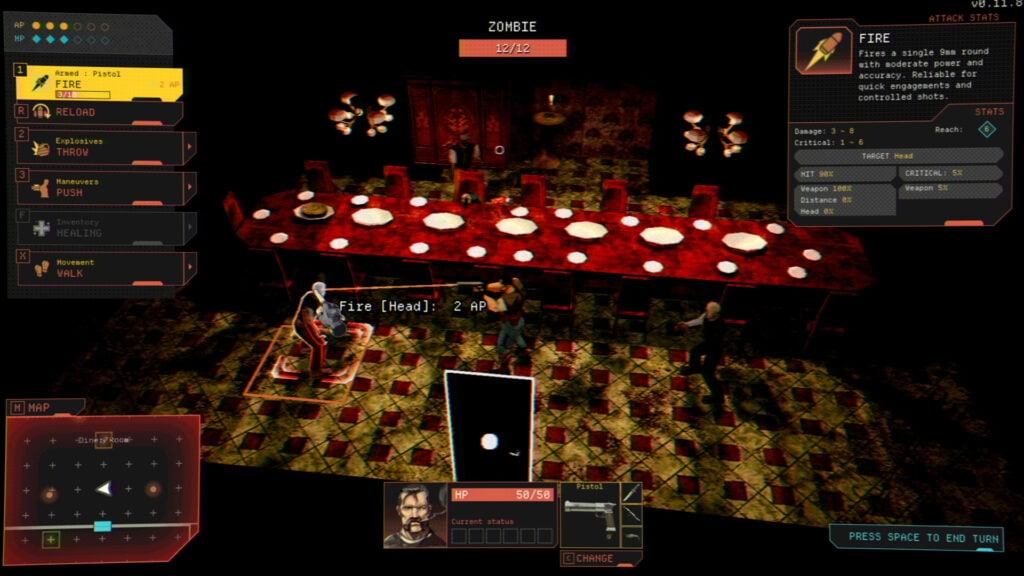
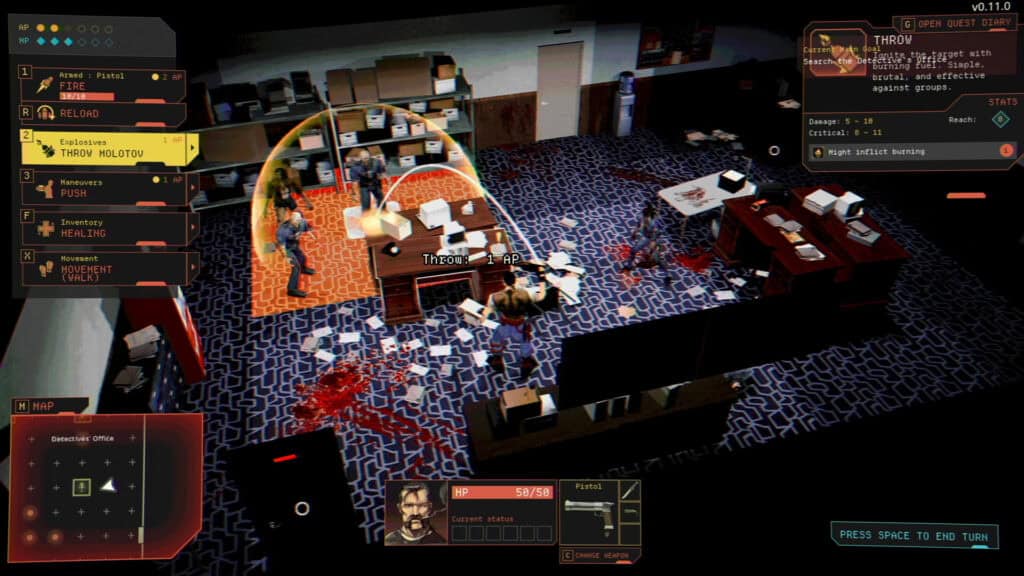
If you grew up on the original PS1-era Resident Evil trilogy and the many games it inspired, you’ll feel immediately at home in Vultures: Scavengers of Death. To the game’s credit, it fully embraces that comparison, leaning into a low-poly visual style alongside grainy CRT and VHS-inspired filters that evoke memories of watching bootleg horror tapes in a friend’s basement.
You play as the titular Vultures squad, a covert team of military operatives specializing in retrieval and extraction missions in hostile environments. Following the outbreak of a zombie virus, the group is hired by a mysterious client to locate a missing scientist who may hold the key to a cure. That setup may sound like fairly standard survival horror fare, but Vultures quickly distinguishes itself through its gameplay structure. Rather than simply applying a survival horror aesthetic to a tactics game, it genuinely merges the two genres in a way that feels natural and surprisingly seamless.
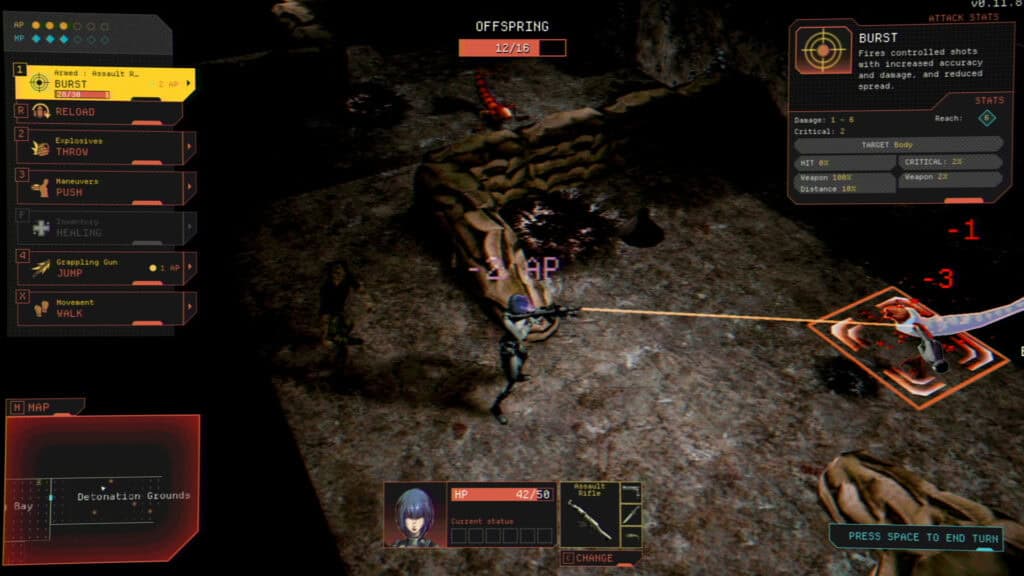
Gameplay is divided into two primary phases: exploration and combat. During exploration, players carefully navigate labyrinthine environments, gather resources, solve surprisingly clever puzzles, and manage progression much like a traditional survival horror game. Once enemies spot you, combat begins, shifting the game into full turn-based tactics mode where positioning, action management, and adapting to evolving threats become critical. And somehow, against all odds, that hybrid approach works flawlessly.
An RE4-Style Upgrade System Provides a Substantial Power Curve to Meet Vultures’ Difficulty Spikes
©
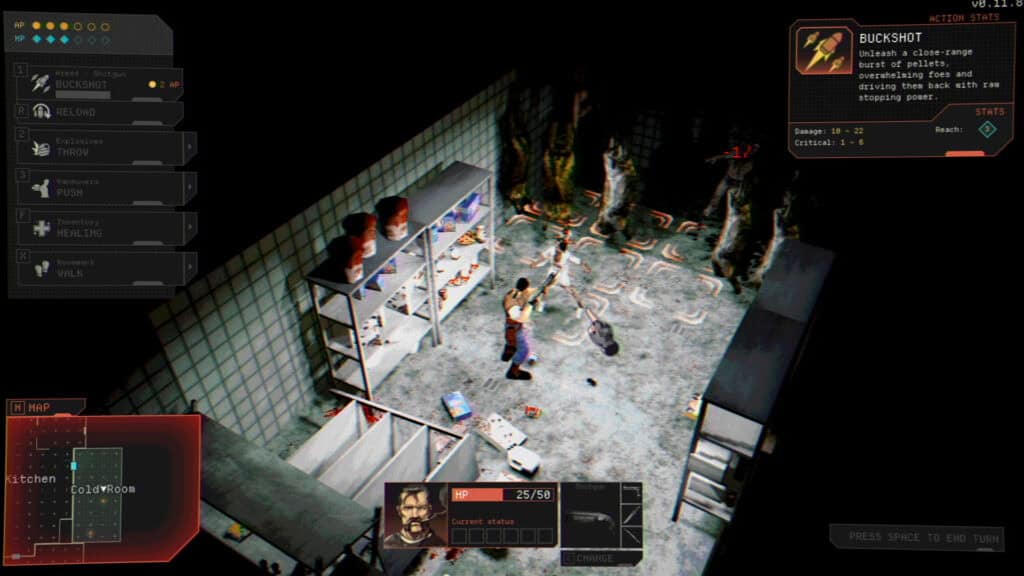
Over the course of Vultures’ roughly 8–9 hour campaign, players alternate between two protagonists: Leopold and Amber. Functionally, the two are mostly similar, though each has unique traversal abilities that slightly alter how encounters play out. Leopold can move diagonally and vault over certain objects, while Amber has the clear edge thanks to an incredibly satisfying grappling hook. It lets her cross gaps, launch herself directly into enemies for follow-up attacks, and even disarm larger shielded enemies by yanking their defenses away.
Outside of movement differences, both characters share the same arsenal of weapons, and upgrading those tools of destruction feels heavily inspired by Resident Evil 4 in the best possible way. Throughout each mission, players collect valuables scattered across environments that can later be exchanged for permanent weapon upgrades back at the Vultures’ base of operations. Those upgrades become increasingly important as enemy encounters escalate in complexity and danger, creating a satisfying progression curve that steadily expands your tactical options.
By the time you reach the game’s final act — a solid three-mission stretch leading into the finale — you’ll likely have encountered nearly every enemy type and amassed more ammunition and firepower than you know what to do with. Aside from a few boss encounters that feel overly reliant on trial-and-error or RNG, combat eventually evolves into a full-blown power fantasy where you’re tearing through hordes with reckless efficiency. But honestly, that escalation feels perfectly in line with the survival horror games that inspired Vultures in the first place.
The Technical State of Vultures Might be a Dealbreaker for Some
©
As enjoyable as Vultures is mechanically, its technical state leaves plenty of room for improvement. Context matters here: Team Vultures is an independent two-person studio that has clearly poured an enormous amount of passion into the project. And to the game’s credit, it has noticeably improved in the weeks leading up to release. Still, several persistent technical hiccups and progression-blocking bugs remain, and they’ll likely sour the experience for some players.
None of the issues are outright catastrophic, but there are frequent moments where movement, menus, or enemy behaviors glitch out and halt progression entirely, forcing players to reload a save. That’s especially frustrating in a game where lengthy tactical encounters can demand careful positioning and resource management. Thankfully, frequent manual saving, a habit tactics players are probably already conditioned to adopt, mitigates most of the frustration.
My time with the final launch build suggests that Vultures could have benefited from a little more polish before release, though it is at least fully playable from beginning to end, provided you’re willing to tolerate occasional reloads when bugs appear.
I also spent some time playing Vultures on Steam Deck. While I’d still strongly recommend using a desktop setup with a mouse and keyboard, the game ran surprisingly well on Valve’s handheld, and the controls translated far better than expected. It’s not officially Steam Deck Verified yet, but it certainly feels like it could get there as Team Vultures continues rolling out patches and improvements post-launch.
Even With its Shortcomings, Vultures is a Game I See Myself Returning To
©
If the technical issues are eventually ironed out (and hopefully they will be), what remains is a game doing something genuinely fresh and pulling it off remarkably well. When I say that a hybrid between old-school survival horror and turn-based tactics is something I’ve wanted for years, I’m not exaggerating. Vultures succeeds because it doesn’t just borrow aesthetics or surface-level mechanics from its inspirations; it understands why those games worked in the first place and finds a way to merge them into something that feels cohesive and original.
That alone already makes the game memorable. The fact that it’s consistently fun on top of that is what elevates it. The campaign is tightly paced and perfectly suited for repeat playthroughs. I can already see myself revisiting it regularly in the same way I return to yearly playthroughs of Resident Evil and Resident Evil 2. If nothing else, Vultures: Scavengers of Death proves that the survival horror-meets-turn-based tactics hybrid absolutely works. I’d love to see Team Vultures get the opportunity to make a sequel that refines the rougher edges of the original in much the same way Capcom evolved the survival horror formula between 1996’s Resident Evil and 1998’s Resident Evil 2.
Bottom Line
While it’s far from perfect, Vultures: Scavengers of Death succeeds in creating a genuinely unique genre blend in a way that only the best indie games sometimes manage. Technical issues and uneven boss encounters occasionally drag the experience down, and the game loses a bit of momentum during its final stretch, but the core experience remains tightly paced, inventive, and consistently engaging from beginning to end.
Survival horror already encourages players to think carefully about every encounter. Vultures takes that idea one step further by transforming combat into tense, strategic battles that reward experimentation, replayability, and creative tactical thinking. And if you’re a fan of survival horror, turn-based tactics, or both, you owe it to yourself to give Vultures a shot, especially if you don’t mind doing a little save scumming along the way.
Rating: 7.5 out of 10
The image featured at the top of this post is ©Vultures: Scavengers of Death key art